
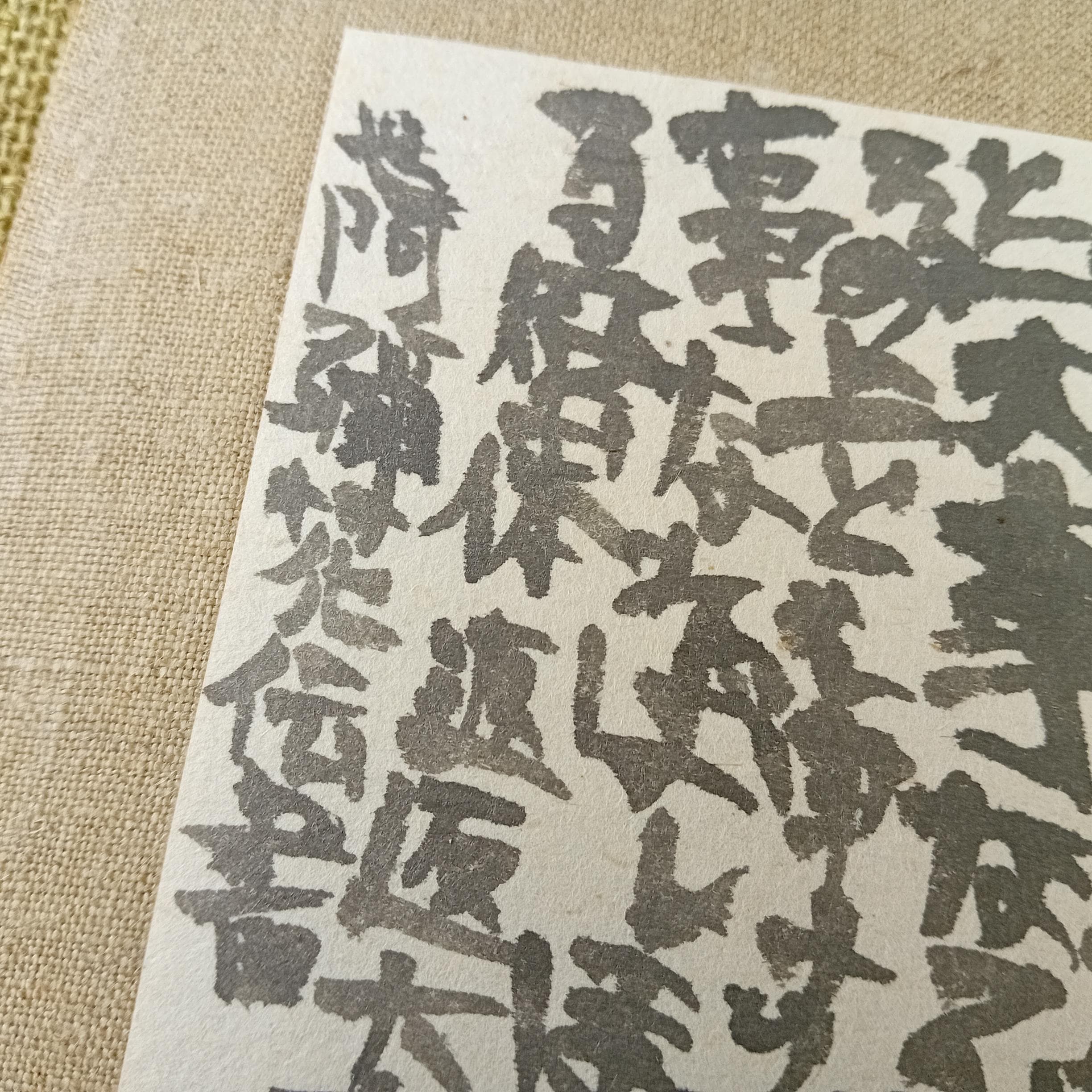
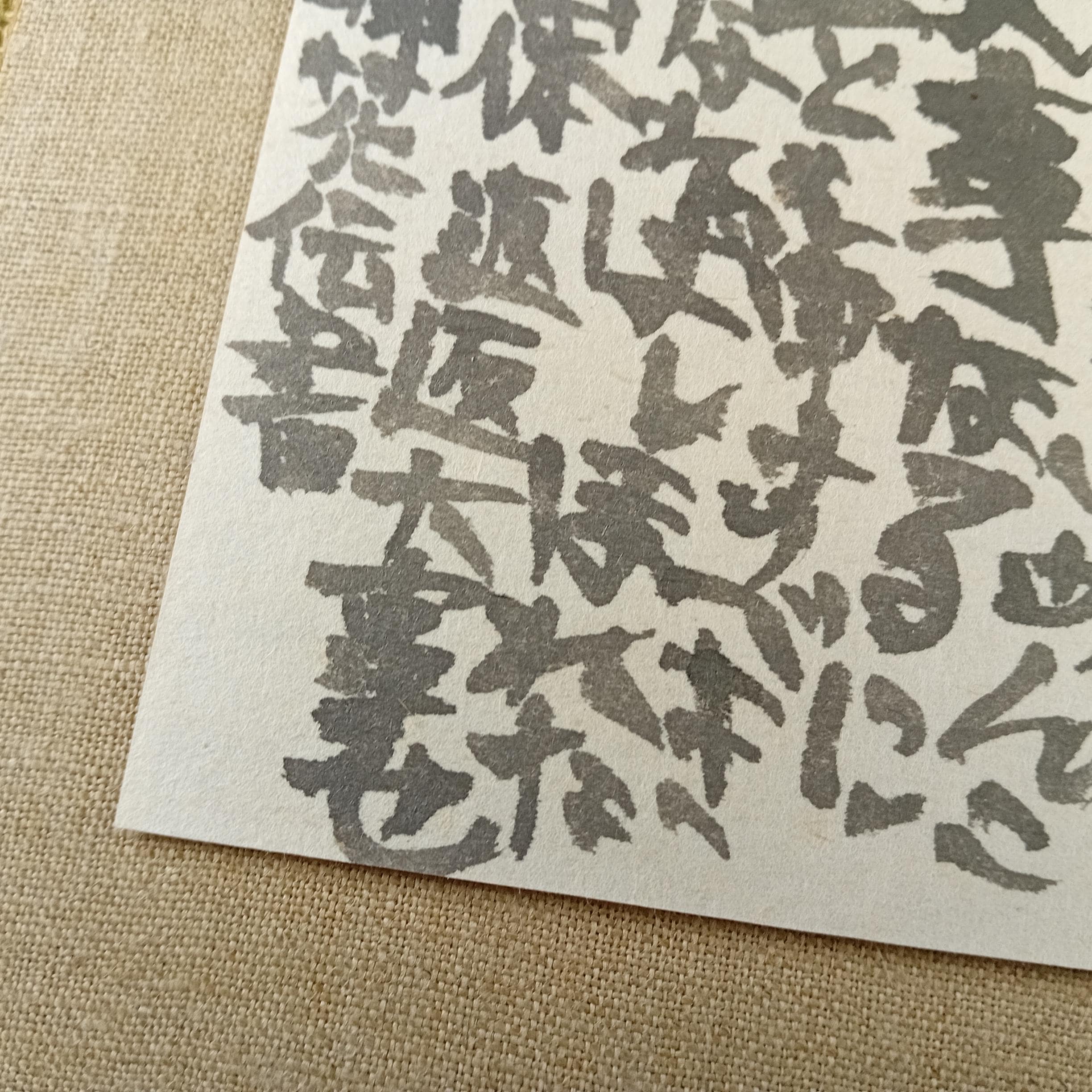
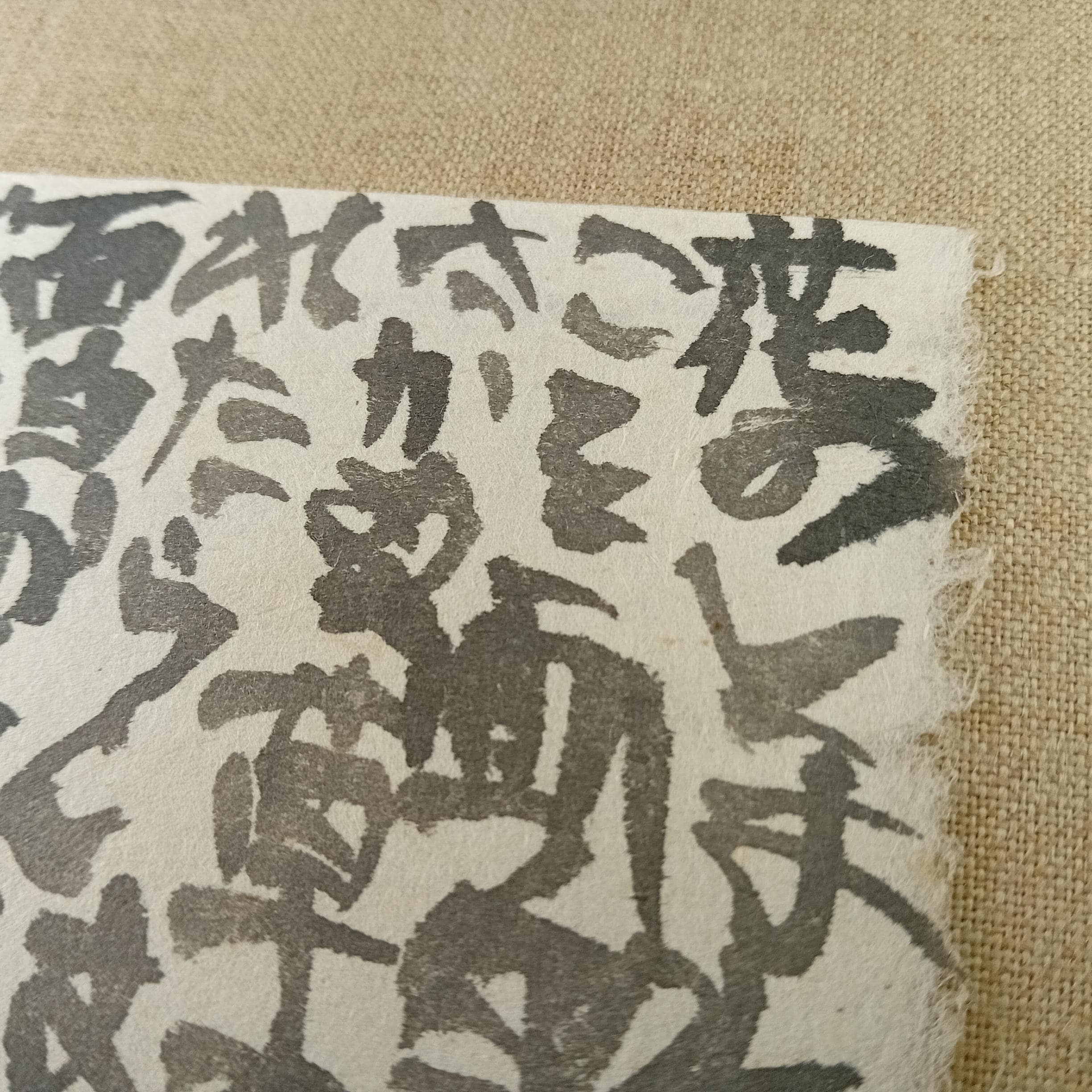
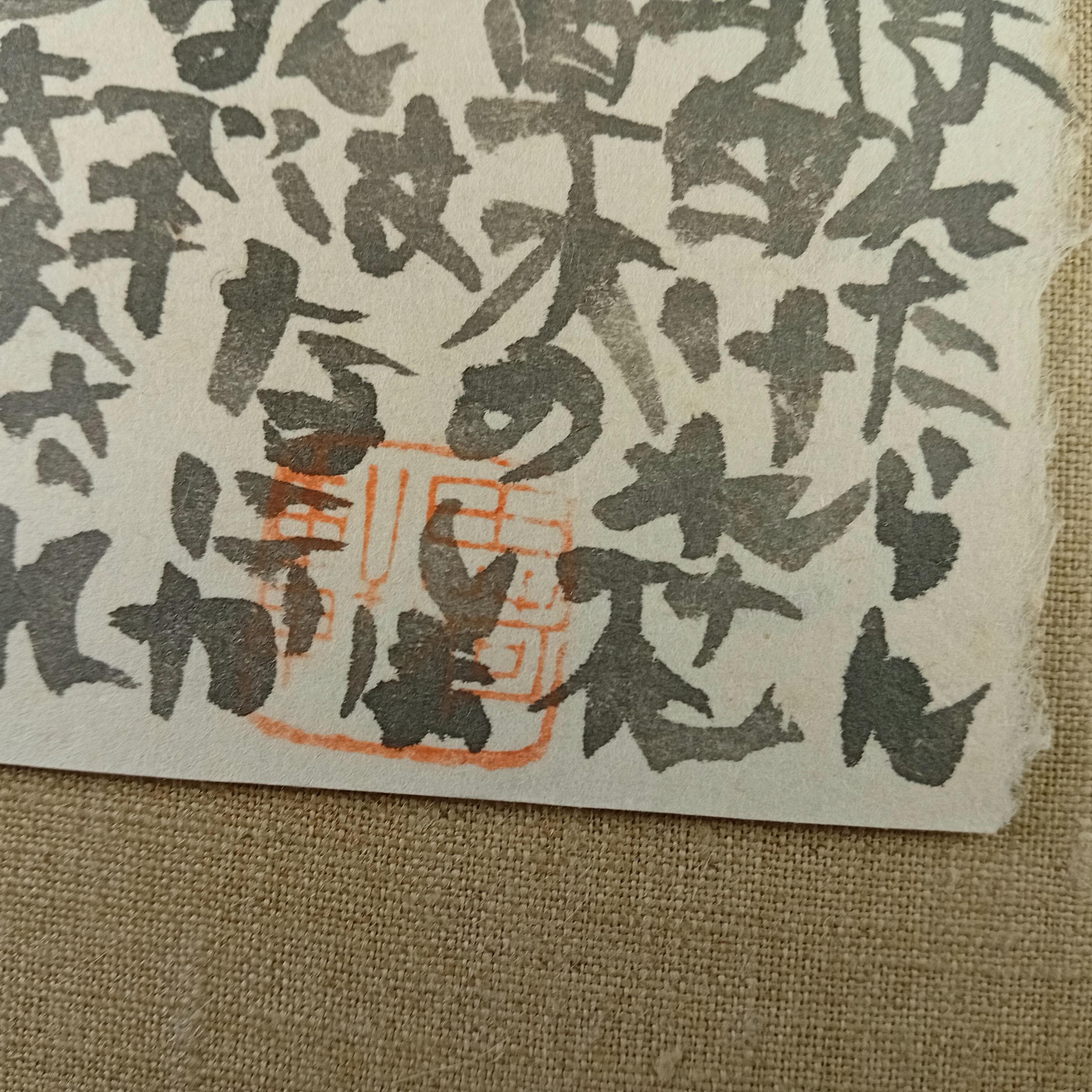
Nagata Kōi — Mumonkan Case 48, Japanese Zen Calligraphy, 1963
$757.89
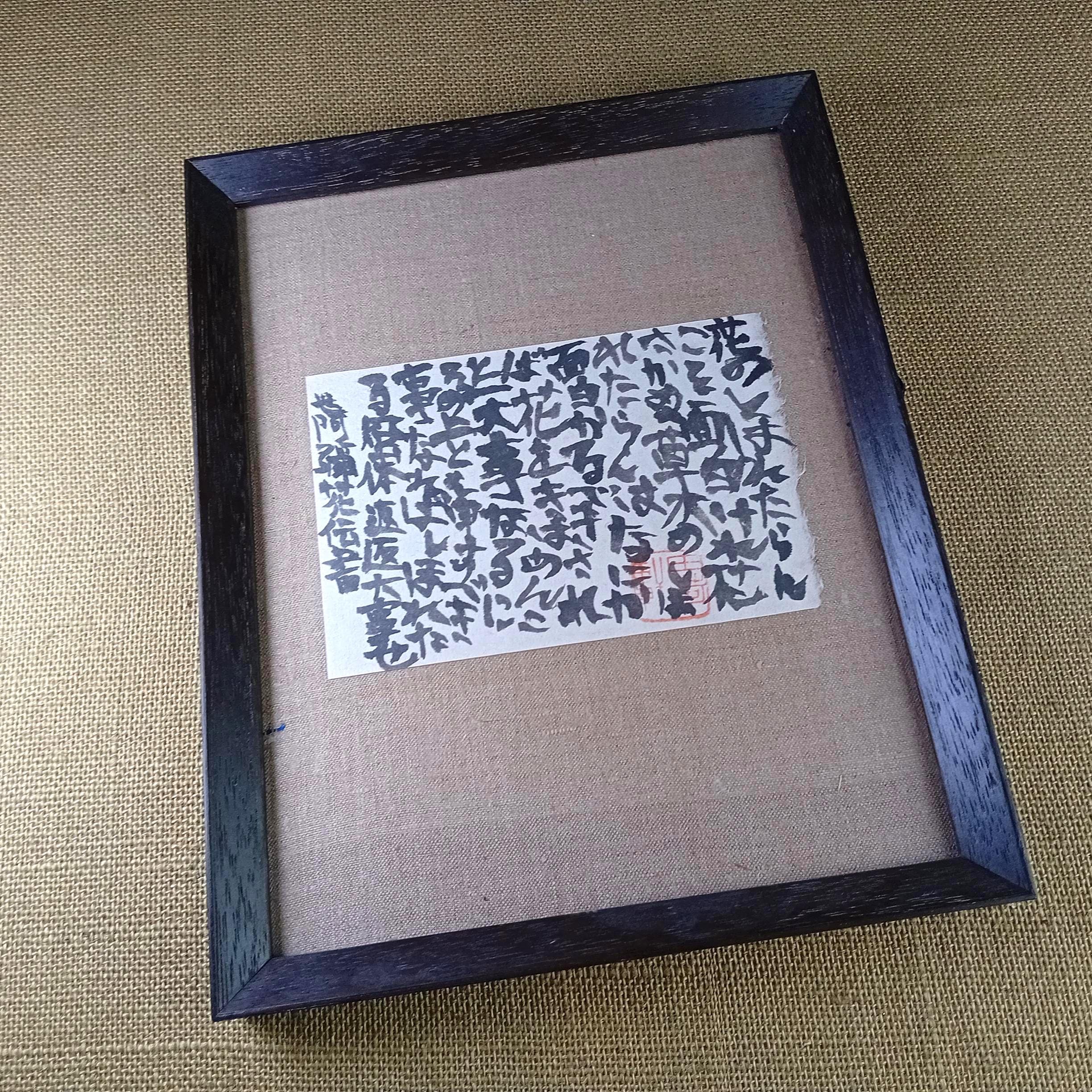
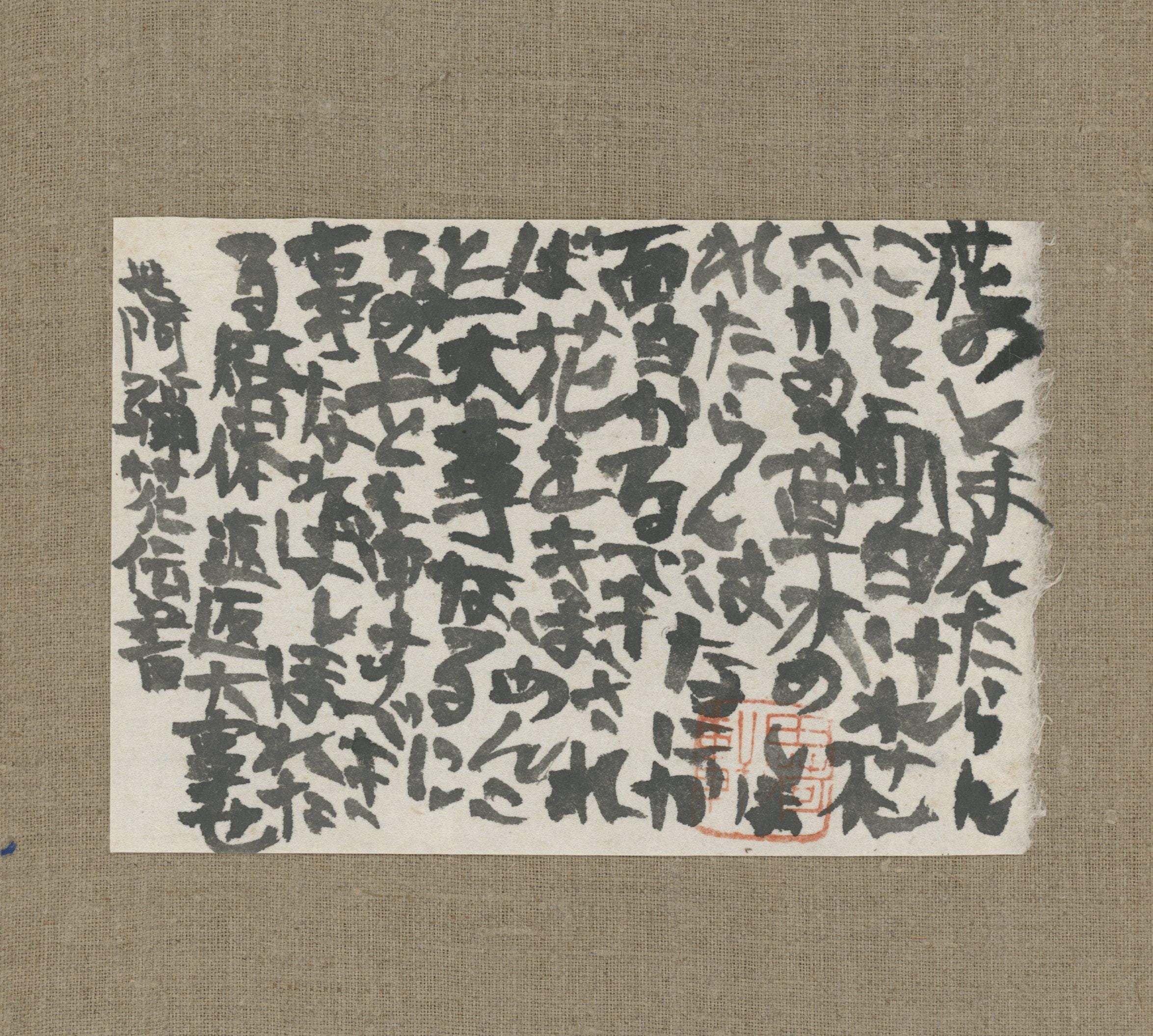
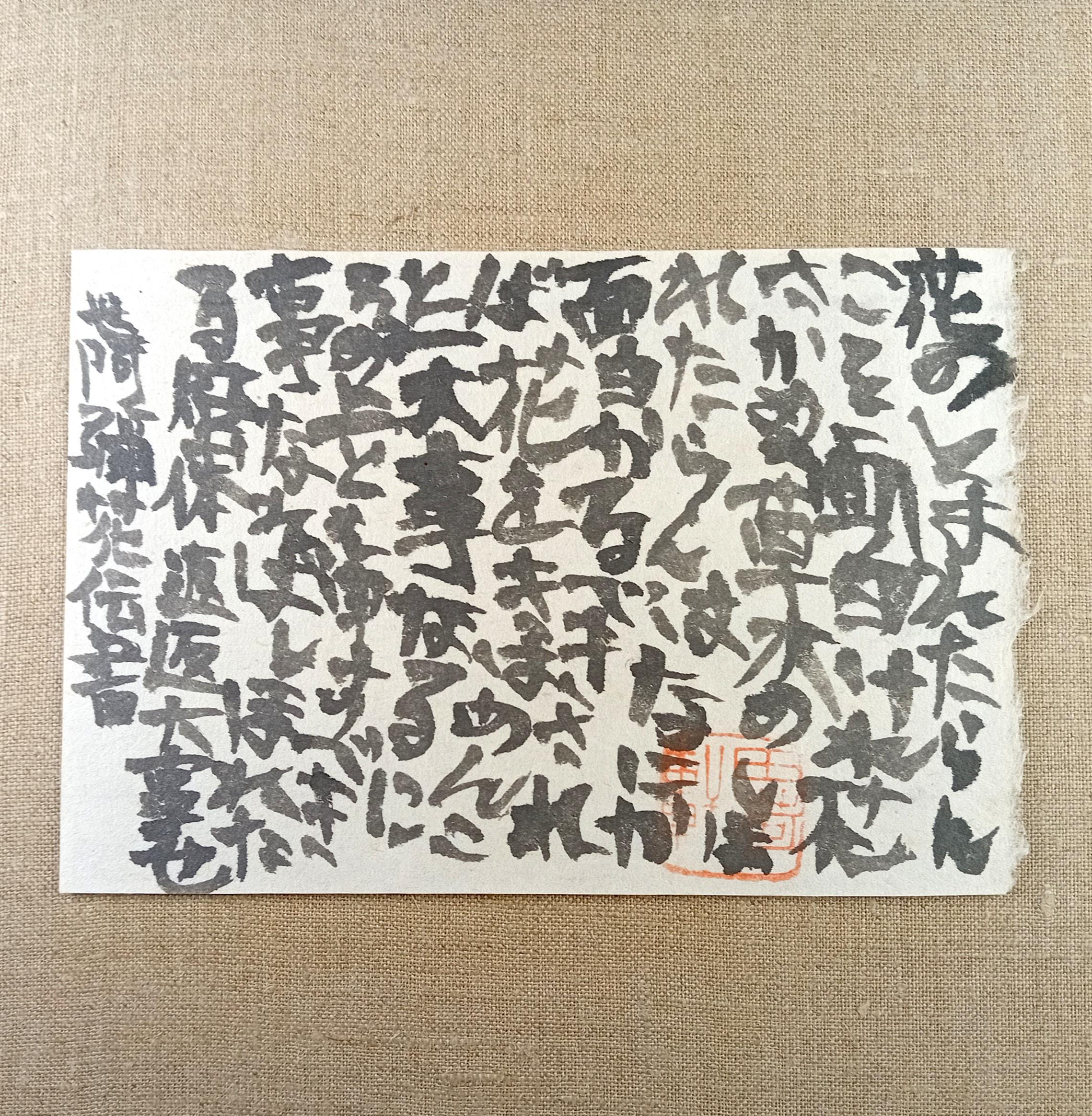
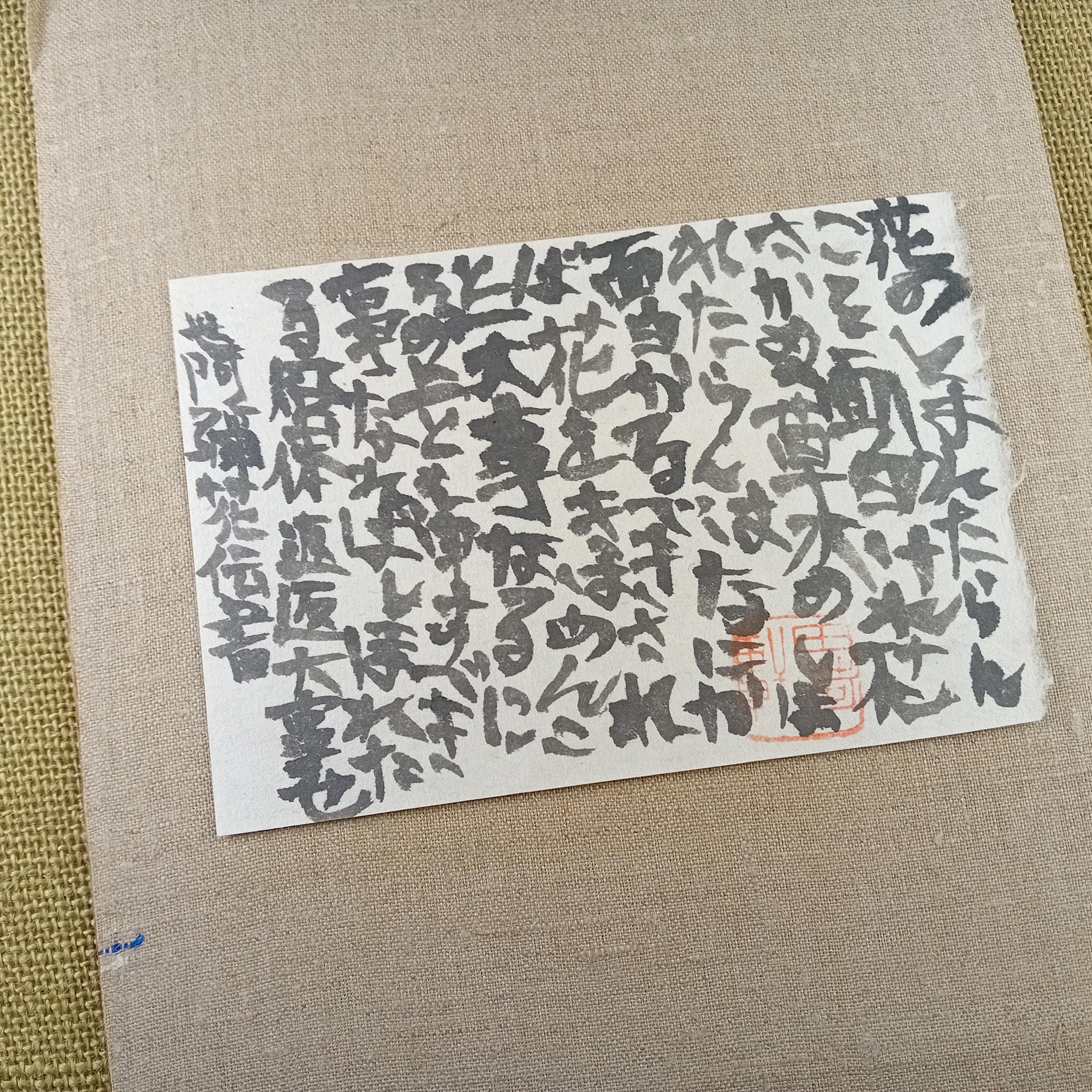
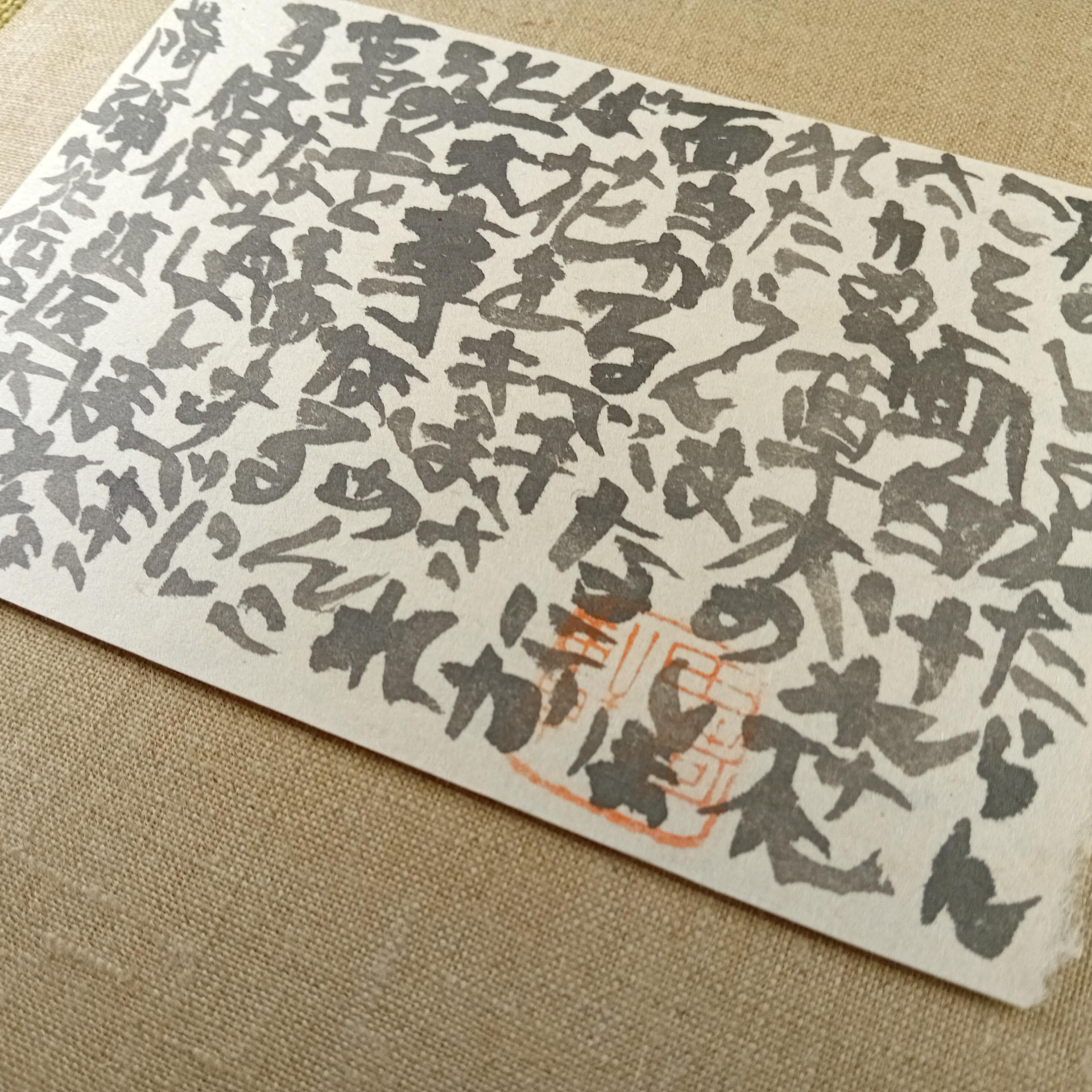
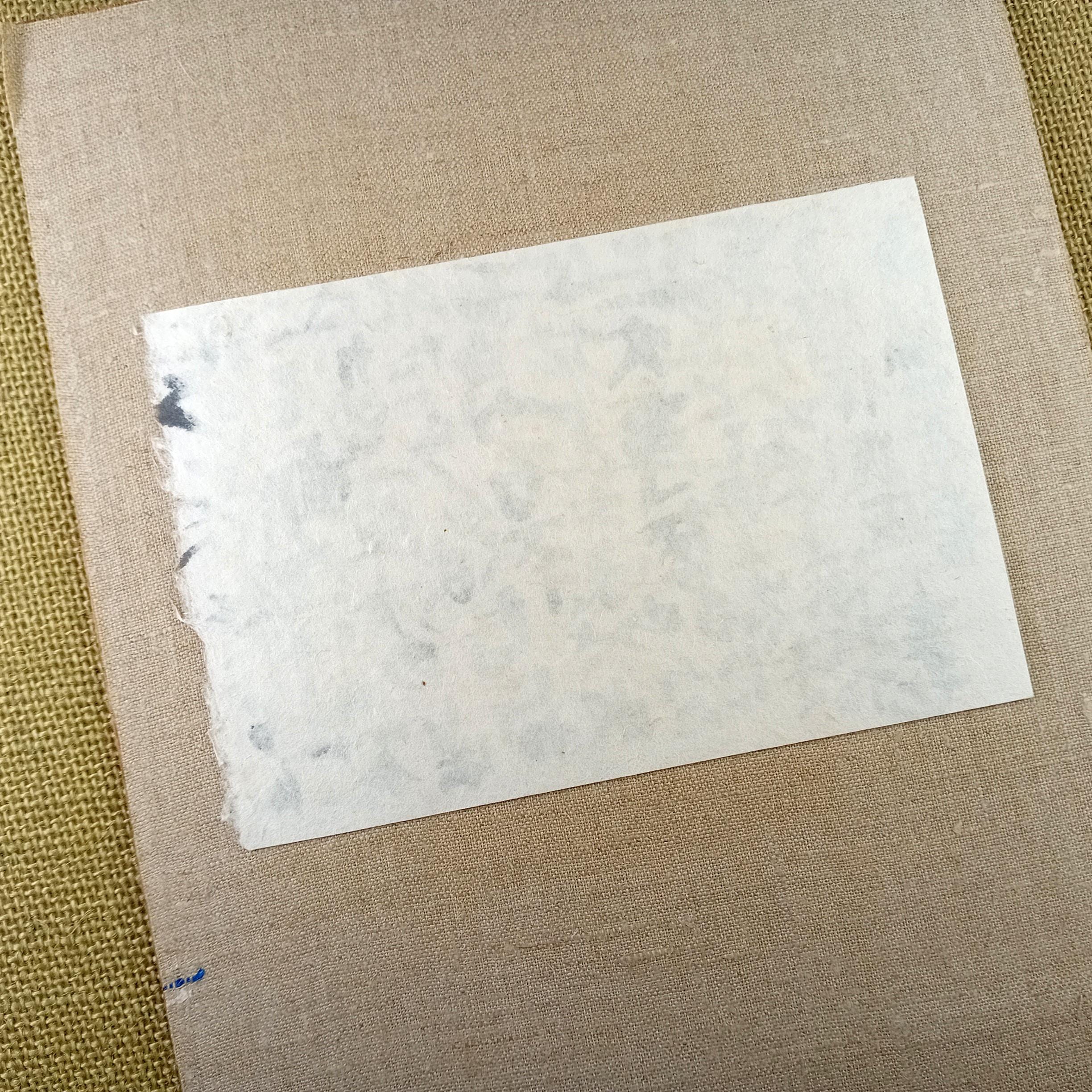
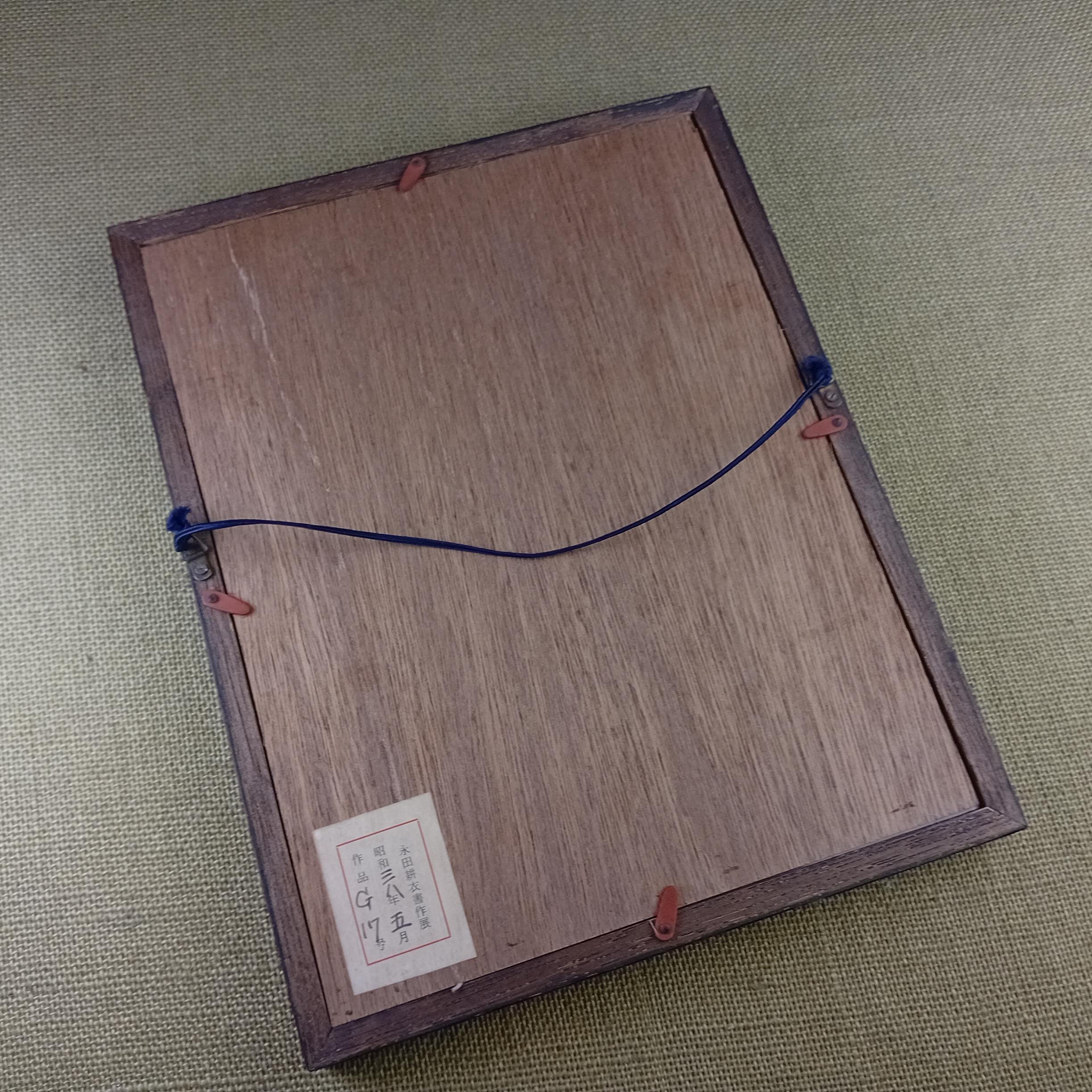
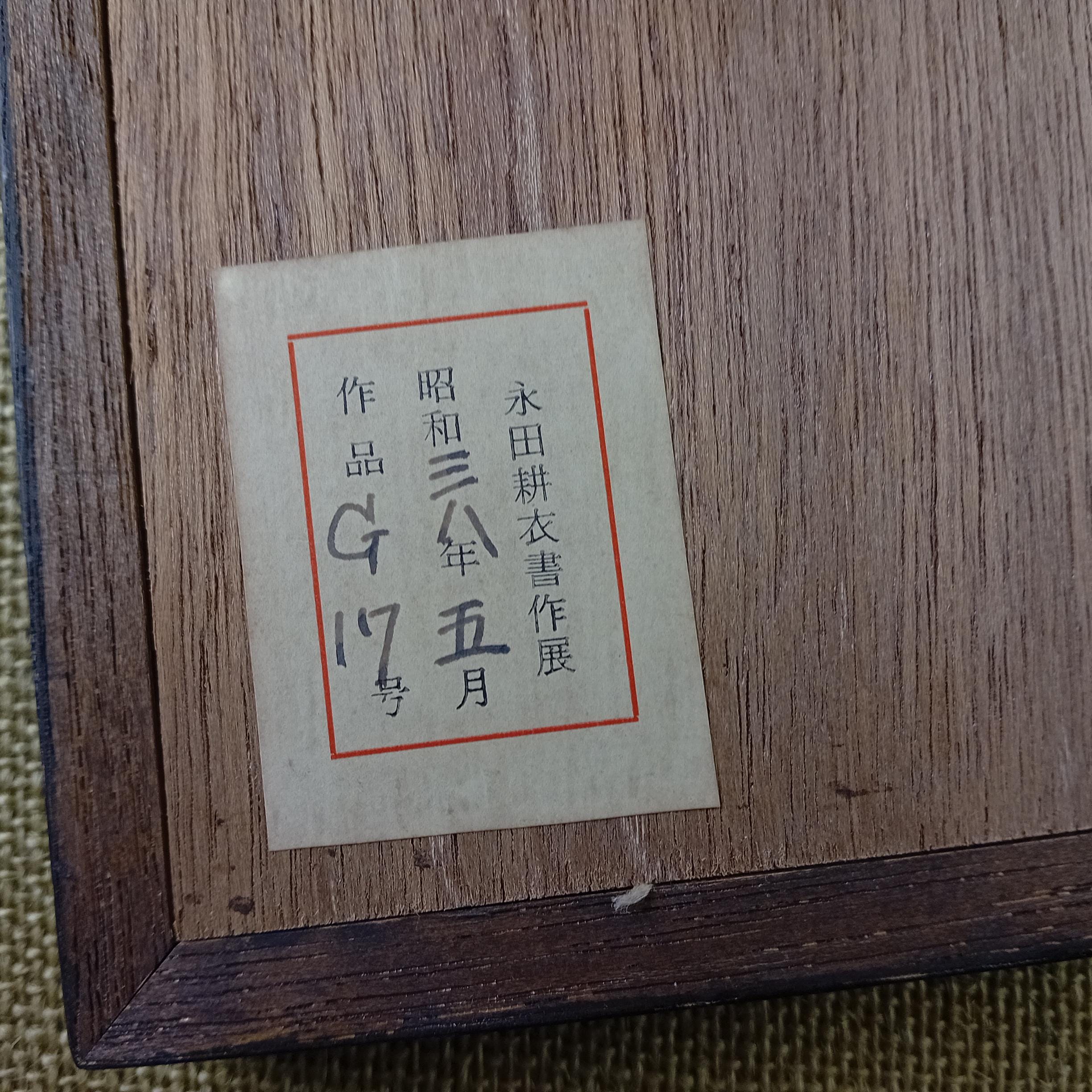
A calligraphic work by Nagata Kōi, exhibited at the Nagata Kōi Shosakuten in May 1963. The original exhibition label remains on the reverse, recording the date and the individual work number G17.
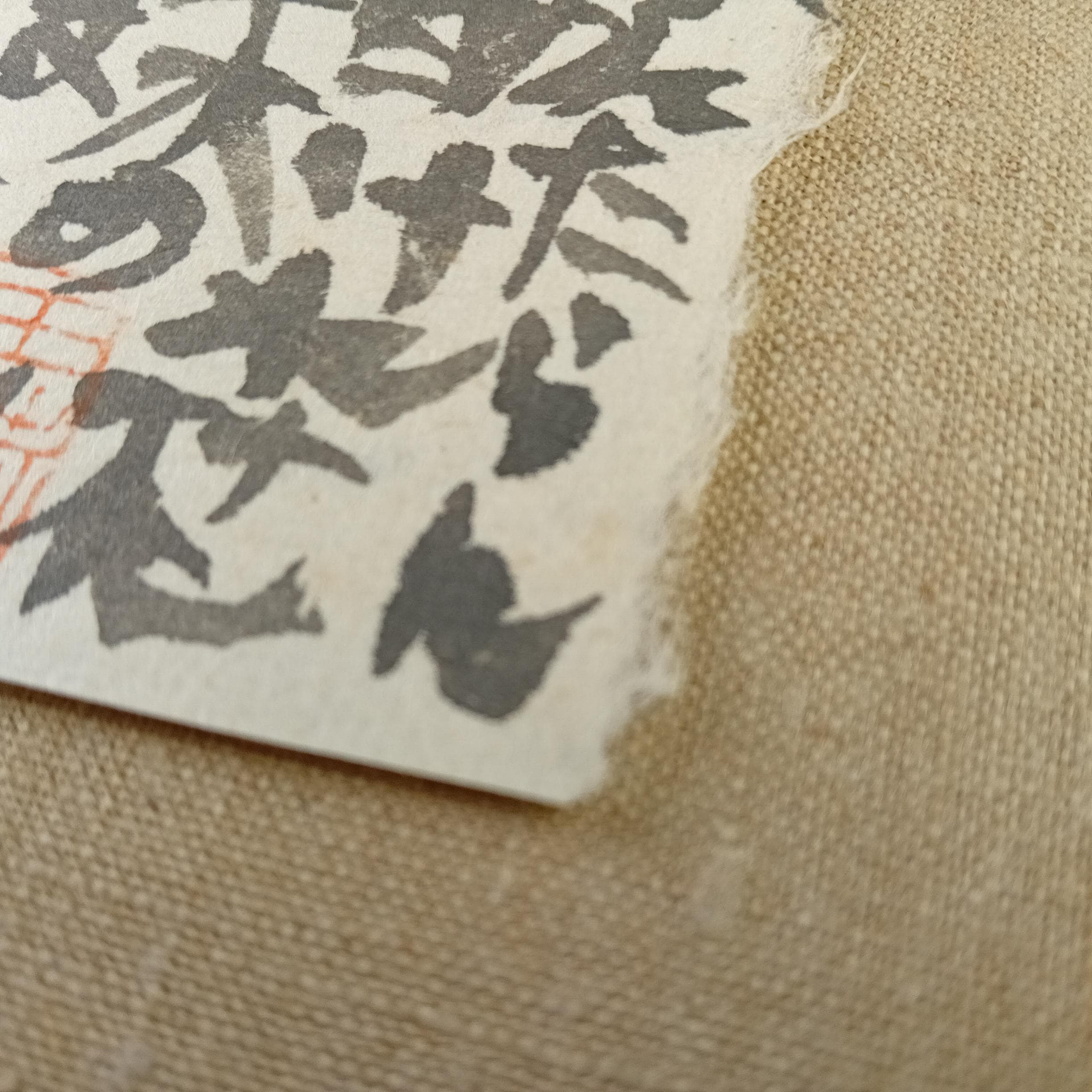
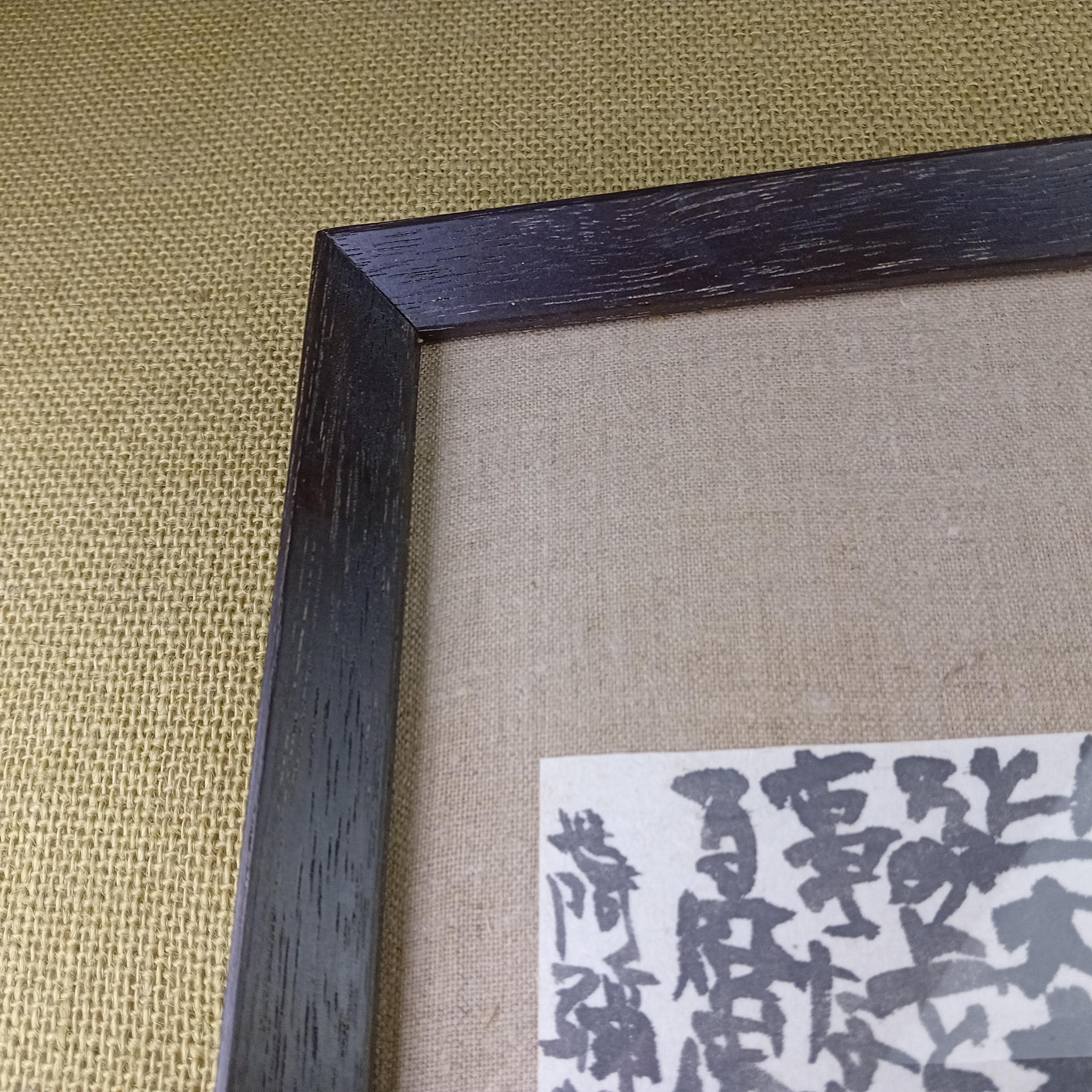
The text is written in ink on a small sheet of washi, mounted on textile and presented under glass in a vintage Japanese wooden frame. The artist’s red name seal appears on the sheet.
Artist
Nagata Kōi (1900–1997) was a Japanese haiku poet, theorist, calligrapher, and ink painter, and a major independent voice in experimental haiku of the Shōwa period.
Kōi developed the concept of kongen haiku, or “root haiku,” connecting poetry with Zen thought, human existence, bodily experience, ageing, and the idea of “Eastern nothingness.” In 1949, he founded the journal Riraza, which became the principal platform for his independent poetics.
Calligraphy held a distinct place within his practice. Kōi worked with his own poetry, Zen sayings, and classical Buddhist texts. His artistic circle included Munakata Shikō, Kawai Kanjirō, and Suda Kokuta, placing his work at the intersection of modern poetry, Zen, the mingei movement, and experimental art in postwar Japan.
Work and Text
The work contains Case 48 of the Zen collection Mumonkan, concerning the question of the single road to nirvana.
A monk asks the master Ganfeng where this road is located. Ganfeng raises his staff, draws a line, and answers: “Here.” In the continuation of the case, Yunmen responds through a paradoxical image linking a fan, the heaven of Indra, a carp in the Eastern Sea, and a sudden downpour.
The text approaches the Zen idea of the path through immediate action and paradox rather than abstract explanation.
Exhibition Label
The label on the reverse records:
Nagata Kōi Shosakuten
May 1963
Work G17
The dated exhibition label, individual number, and red name seal document the work within Nagata Kōi’s calligraphic output of the early 1960s.
Condition
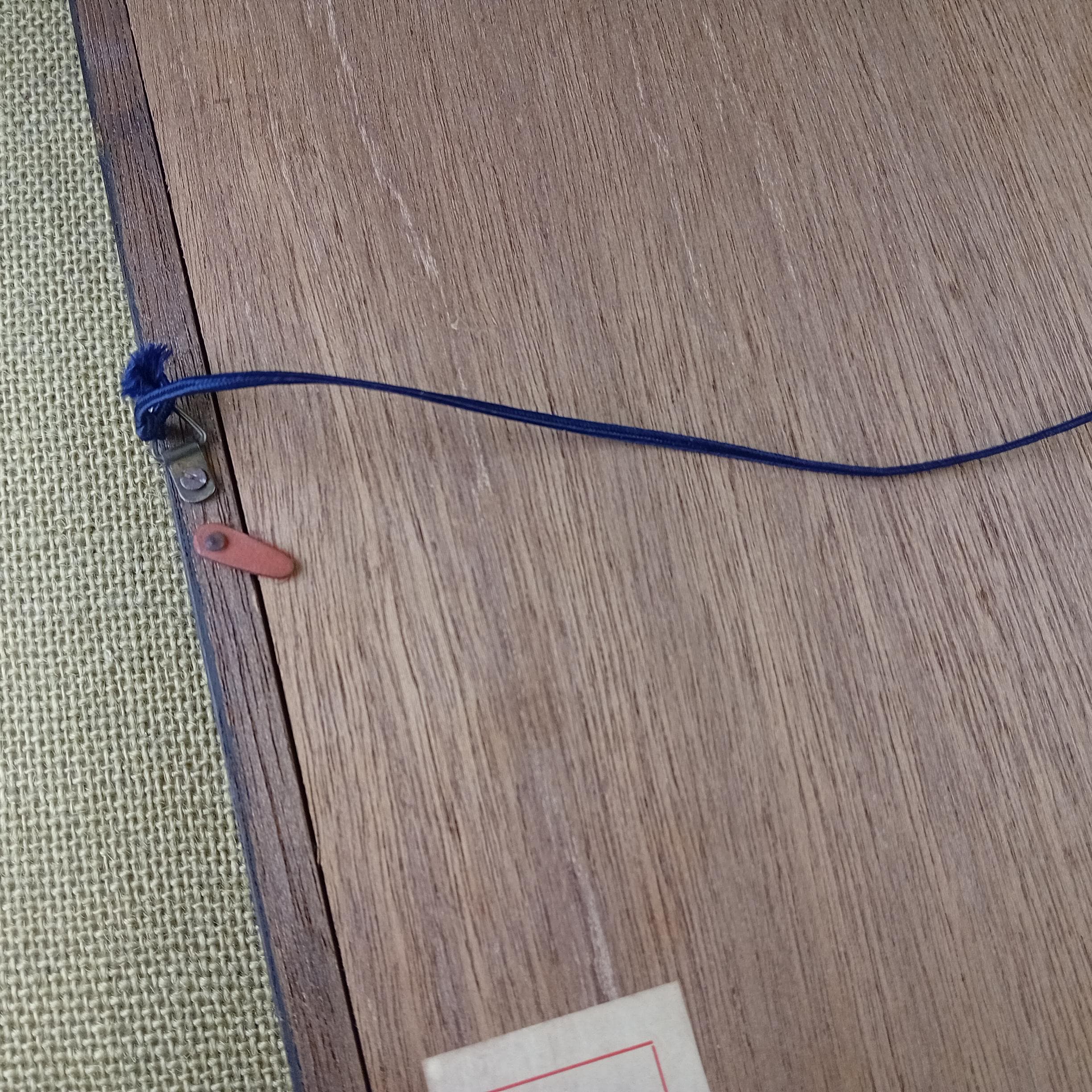
Very good vintage condition. Natural age-related toning of the paper, with light traces of time on the textile mounting and wooden frame. The exhibition label is preserved on the reverse. Please refer to the photographs for details.
Size
Calligraphy sheet: approximately 11 × 16 cm / 4.3 × 6.3 in
Frame: approximately 23 × 29 cm / 9.1 × 11.4 in
Shipping
Safe and tracked shipping from Latvia (Riga Gallery of Japanese Art CloudyYokomido). Protective packaging.
For US buyers: US customs processing is prepaid through the shipping service, so no additional customs processing payment is required upon delivery.
Shipping from Latvia
Processing time
1-3 business days
Customs and import taxes
Buyers are responsible for any customs and import taxes that may apply. I'm not responsible for delays due to customs.
Payment Options
Returns & Exchanges
Returns accepted within 14 days
Buyers are responsible for return shipping costs. If the item is not returned in its original condition, the buyer is responsible for any loss in value.
I gladly accept cancellations
Request a cancellation within: 1 hours of purchase